Bitcoin 101 For Beginners: BTC’s Past, Present and Future
A beginner's guide to Bitcoin covering its history, how it works, how to buy and store it securely, and where BTC is headed in 2026 and beyond.
- Bitcoin is decentralized digital money with a fixed supply of 21 million coins.
- Satoshi Nakamoto created Bitcoin in 2009 - their identity remains unknown.
- Self-custody with a hardware wallet is the safest way to hold BTC.
- Most Bitcoin losses come from phishing and bad platforms, not network hacks.
- Bitcoin ETFs and institutional adoption have made BTC a mainstream asset class.
Introduction
Welcome to the world of Bitcoin, the original cryptocurrency that has captured global attention since its inception in 2008, with its appeal as so-called “digital gold” and a hedge against centralized monetary inflation. Whether you’re a professional trader or a beginner investor trawling Reddit for answers, understanding what Bitcoin really is has become a necessity in today’s digital age.
This comprehensive Bitcoin guide by Kerberus aims to demystify Bitcoin for beginners, share the most essential need-to-know information, and provide a solid foundation for your crypto journey.
Bitcoin 101 For Beginners: BTC’s Past, Present and Future
Download the complete PDF guide covering Bitcoin history, how BTC works, how to buy and store it securely, and where BTC is headed.
What is Bitcoin?
(Image free to use if backlinks to this article)
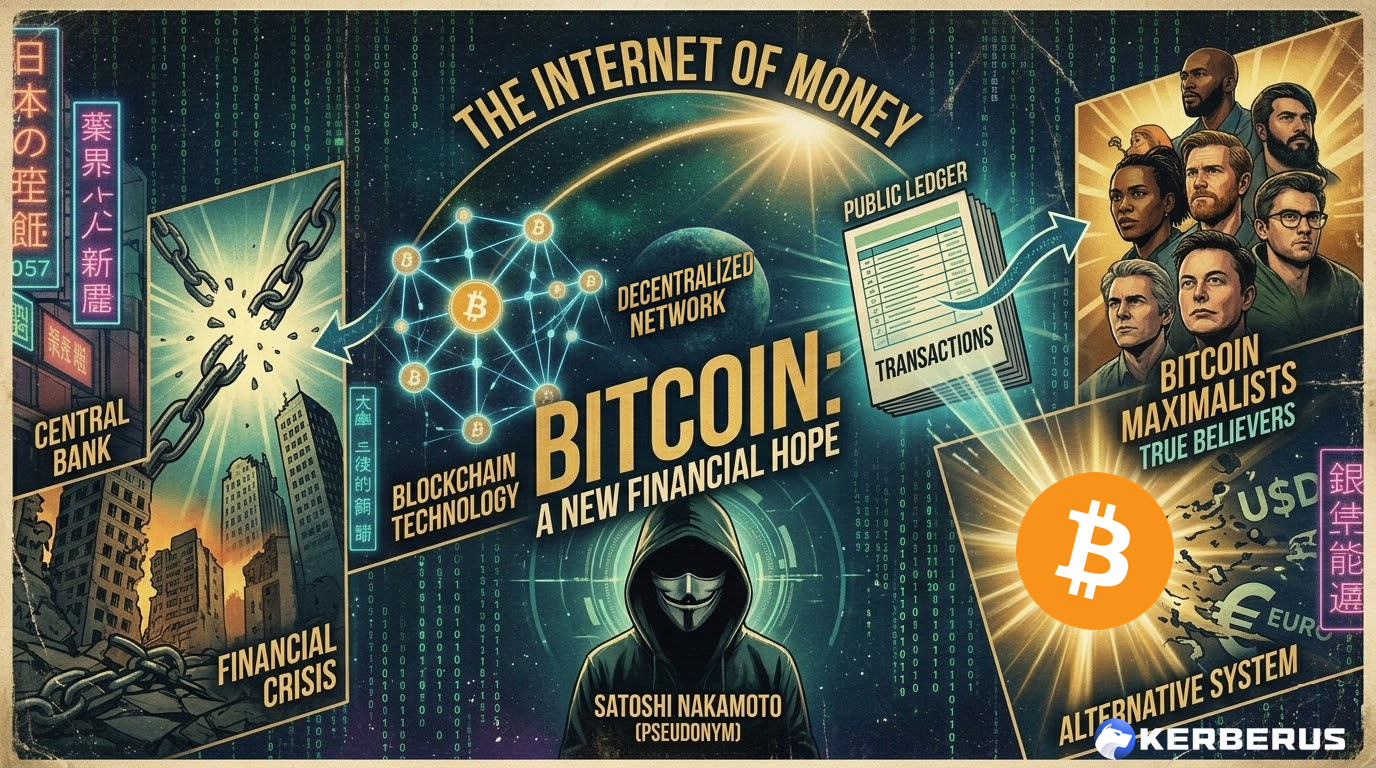
Bitcoin is a digital currency created in 2009 by an unknown person or group using the pseudonym Satoshi Nakamoto, who first proposed it to a group of hackers called cypherpunks and holds a 1m BTC wallet. Bitcoin’s inception came about as a reaction to the 2008 financial crisis, with the goal of creating a currency free from central bank control.
Unlike traditional currencies issued by governments such as the US dollar or euro Bitcoin operates on a decentralized network using blockchain technology. This revolutionary approach to money has made Bitcoin a popular choice for online transactions and investments. BTC exists only in digital form, making it inherently resistant to physical damage or loss, unlike gold or silver.
Bitcoin transactions are verified by network nodes through cryptography and recorded on a public ledger known as a blockchain. This transparency and immutability are part of what has made Bitcoin the greatest financial innovation since the Internet.
What is Wrapped Bitcoin (wBTC)?
Wrapped Bitcoin (wBTC) is a way to use Bitcoin on other blockchains like Ethereum and Solana that Bitcoin itself can’t natively interact with.
The basic mechanic
You deposit real BTC with a custodian (the largest is BitGo). They lock it in a vault and mint an equivalent amount of wBTC tokens on Ethereum - 1 wBTC always represents 1 BTC. When you want your BTC back, you burn the wBTC and the custodian releases the original Bitcoin.
Why it exists
Bitcoin’s base layer has no smart contract functionality. Networks like Ethereum do. wBTC lets your Bitcoin participate in Ethereum DeFi - lending protocols like Aave, liquidity pools on Uniswap, yield strategies, and so on - things you simply can’t do with native BTC.
How To Protect Your wBTC with Kerberus
This is exactly the kind of risk surface Kerberus is designed for. When users interact with wBTC on DeFi platforms by approving contracts, bridging assets, connecting wallets etc. that’s where wallet drainers, malicious approvals, and phishing attacks happen.
The BTC itself may be “safe” in BitGo’s vault, but the wBTC sitting in your Ethereum wallet is exposed to all the same smart contract risks as any other ERC-20 token.
Who is Satoshi Nakamoto?
Satoshi Nakamoto is the pseudonymous person or group who created Bitcoin and authored the Bitcoin Whitepaper. Despite many attempts to uncover Nakamoto’s identity, it remains unknown. Nakamoto ceased communicating with the Bitcoin community in 2010, and their estimated 1 million bitcoins remain untouched to this day.
Leading Candidates to be Satoshi Nakamoto
(Image free to use if backlinks to this article)
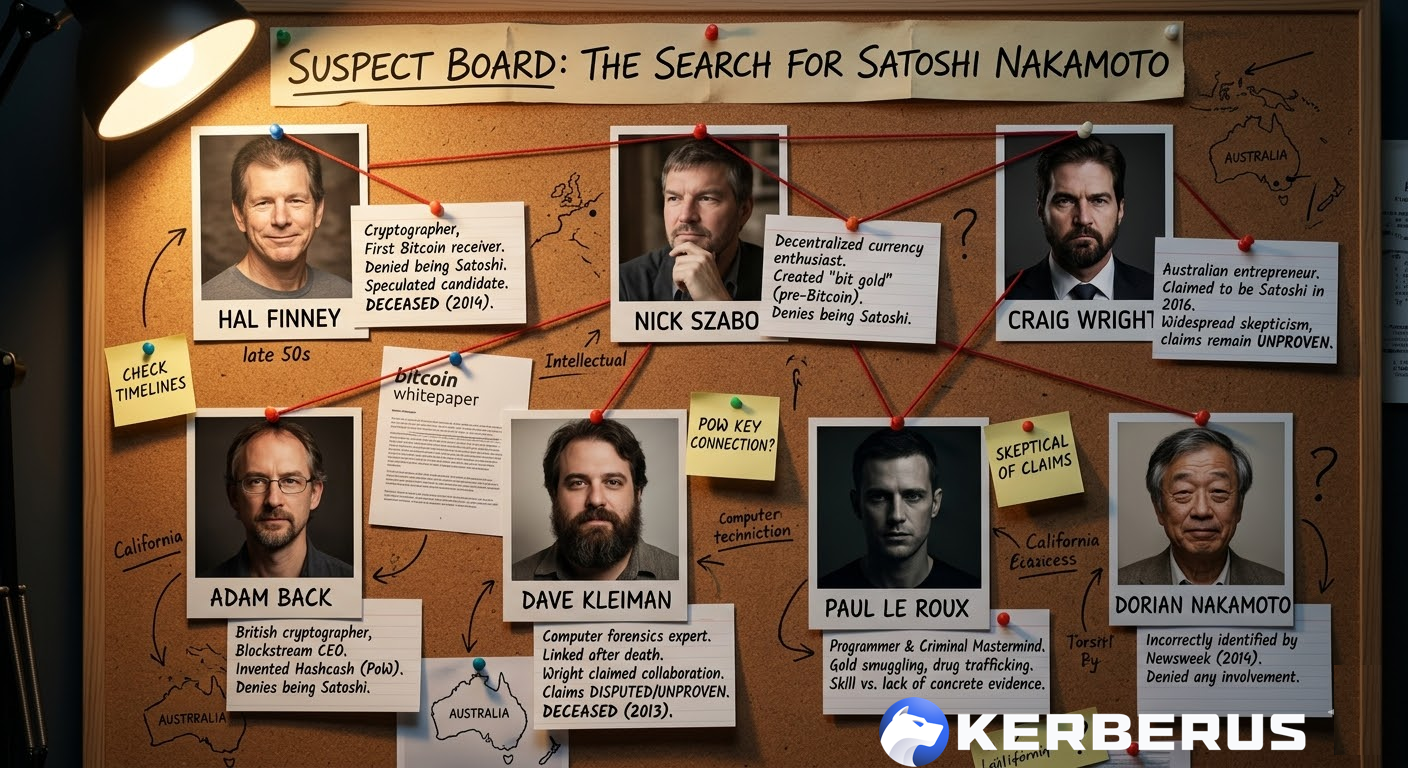
Hal Finney: A preeminent cryptographer and the first person to receive a Bitcoin transaction from Nakamoto. Despite his denial, some speculate he may have been Satoshi. He passed away in 2014.
Nick Szabo: A decentralized currency enthusiast who created “bit gold” before Bitcoin. His work bears strong similarities to Bitcoin, though he denies being Satoshi.
Craig Wright: An Australian entrepreneur who claimed to be Satoshi in 2016. His claim has been met with widespread skepticism and remains unproven.
Adam Back: A British cryptographer and CEO of Blockstream. Back invented Hashcash, a proof-of-work system used to limit email spam which shares key concepts with Bitcoin’s design. He has denied being Satoshi.
Dave Kleiman: An American computer forensics expert linked to Bitcoin’s creation after his death in 2013. His business partner Craig Wright claimed they created Bitcoin together, though this remains disputed and unproven.
Paul Le Roux: A former programmer turned criminal, Le Roux has been suggested as a candidate due to his programming skills, though no concrete evidence links him to Bitcoin’s creation.
Dorian Nakamoto: A Japanese-American man named Dorian Satoshi Nakamoto was incorrectly identified by Newsweek in 2014. He has denied any involvement.
Some believe Satoshi may be a group of people rather than a single individual, given the sophistication of the Bitcoin software, and also because the anon one refers to themselves as “we” in the whitepaper.
Bitcoin has a strong libertarian culture built around the idea of giving people more control over their money. True believers, or maxis, see it as a safer alternative to traditional financial systems because it is decentralized, limited in supply, and not controlled by one government or company. The community often values long-term thinking, self-custody, and financial independence.
Bitcoin maximalists are people who believe Bitcoin is the most important and trustworthy cryptocurrency. They often think other crypto projects are riskier, less decentralized, or not needed at all. Some people respect maximalists for staying focused on Bitcoin’s core mission, while others think they can be too dismissive of other ideas in crypto.
Why is Bitcoin Valuable?
Bitcoin’s value lies in its scarcity and its potential as a store of value. There will only ever be 21 million bitcoins in existence, making it a deflationary asset. Its decentralized nature also makes it attractive to those seeking an alternative to traditional banking systems.
Bitcoin’s value is further driven by its utility. As a decentralized currency, Bitcoin enables fast, low-cost, and borderless transactions. It is also censorship-resistant, meaning no government can unilaterally shut it down.
Bitcoin as Digital Gold and a Safe Haven Asset
Bitcoin is often likened to “digital gold” due to its finite supply, which will be exhausted around the year 2140 when the 21,000,000th Bitcoin is mined after which network validators will be compensated solely through transaction fees. This scarcity is hard-coded into the Bitcoin protocol by Satoshi Nakamoto.
Bitcoin is increasingly recognized as a ‘safe haven’ asset. In times of economic uncertainty or instability, investors often flock to safe-haven assets like gold or government bonds. Bitcoin, with its decentralized nature and global accessibility, is seen as a modern alternative. Its value is not tied to any single government’s stability, making it potentially attractive during times of economic crisis.
A Brief History of Bitcoin
Since 2008, Bitcoin has experienced many milestones that have seen its price skyrocket and at times crash dramatically. Here are some of its most important moments, along with a timeline covering its evolution over the past 15+ years.
The Bitcoin Whitepaper (31 October 2008)
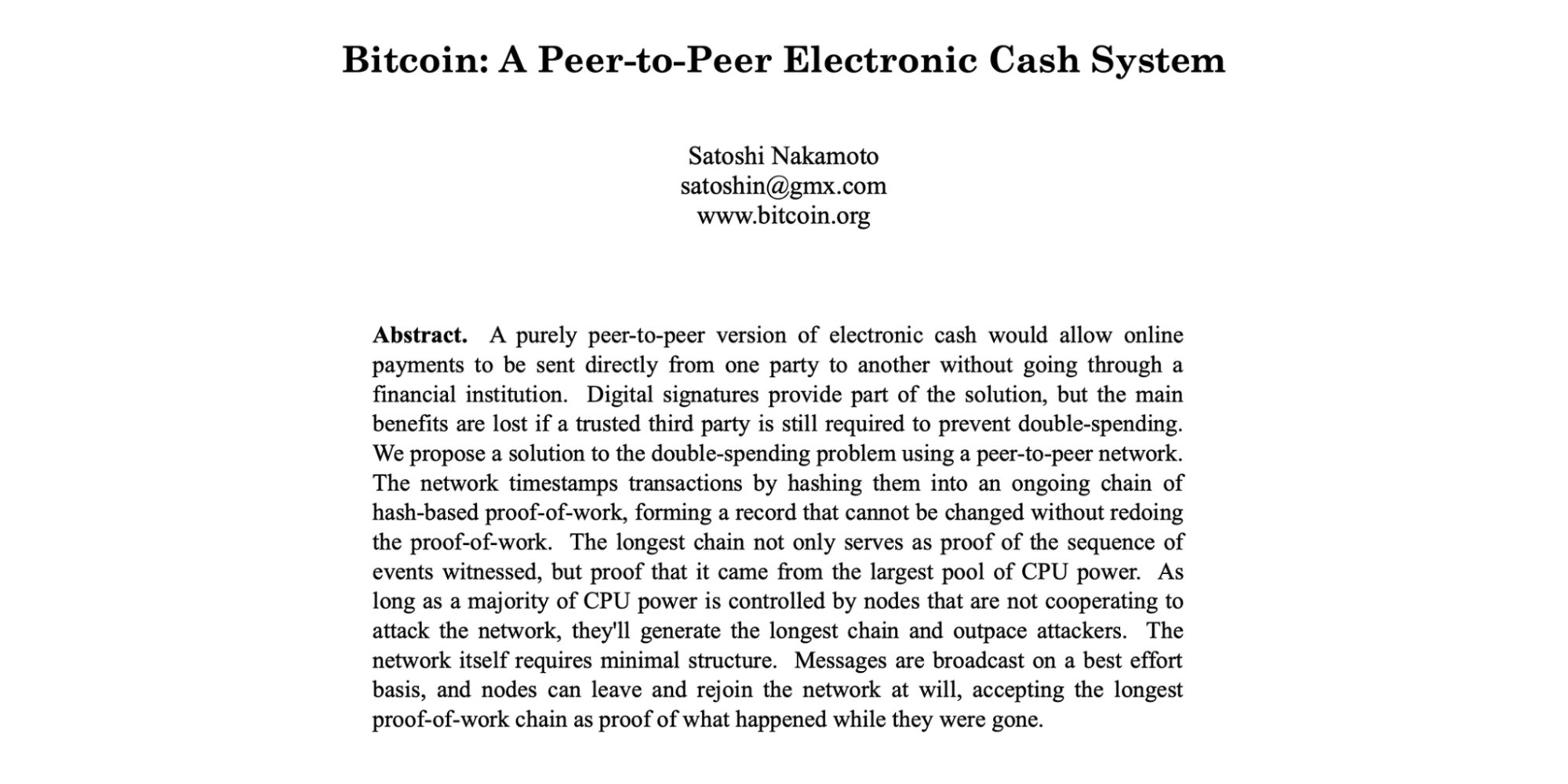
The Bitcoin Whitepaper, titled “Bitcoin: A Peer-to-Peer Electronic Cash System”, is a nine-page document authored by Satoshi Nakamoto. Published on 31 October 2008, the whitepaper outlines the theoretical framework for Bitcoin and the underlying blockchain technology.
It’s a must-read for anyone serious about understanding the principles behind Bitcoin and how it solved the centuries-old challenge of creating money without intermediaries. The whitepaper introduced world-changing concepts including proof of work, mining, and the timestamp server that now form the foundation of blockchain technology.
To dig deeper, read my simplified guide to the Bitcoin whitepaper.
Bitcoin Genesis Block (January 2009)
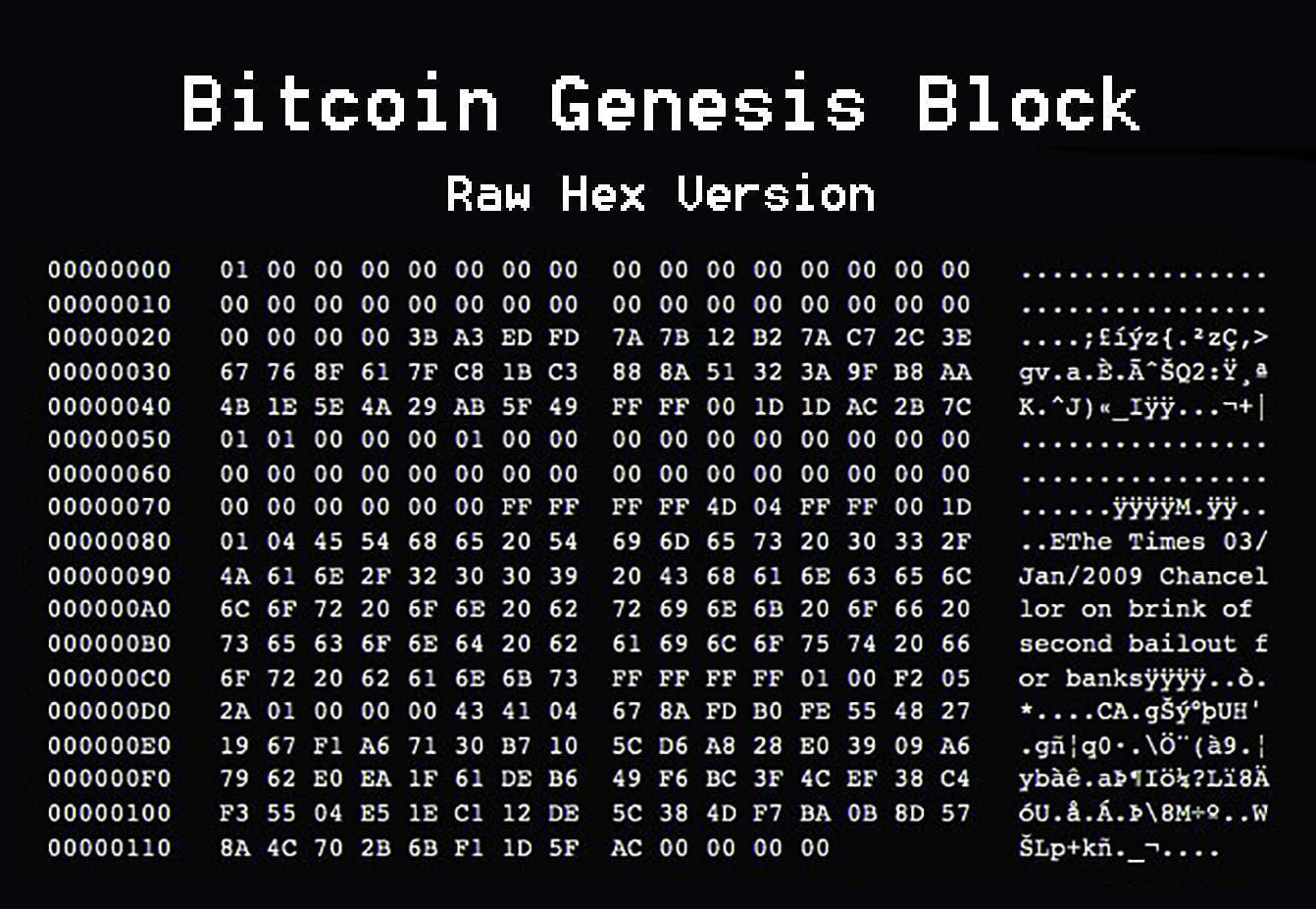
The Bitcoin Genesis Block, also known as Block 0, is the first block of the Bitcoin blockchain. Mined by Satoshi Nakamoto in January 2009, it included a message referencing a headline from The Times about bank bailouts, underscoring Bitcoin’s origins as a response to the financial crisis. The Genesis Block represents the birth of Bitcoin and the blockchain revolution.
Bitcoin Pizza Day (22 May 2010)

Source: Bitcoin Pizza Index
Bitcoin Pizza Day is celebrated on 22 May each year to commemorate the first real-world transaction using Bitcoin. In 2010, programmer Laszlo Hanyecz famously paid 10,000 bitcoins for two pizzas worth about $41 at the time. Today, those same bitcoins would be worth $750 million according to the Bitcoin Pizza Index! This first transaction provided vital price discovery for BTC and established a real fiat value.
Bitcoin Halving (2012, 2016, 2020, 2024)
The Bitcoin halving is a crucial event in the Bitcoin network that reduces the number of new bitcoins created and awarded to miners by half. This event occurs approximately every four years and is a core part of Bitcoin’s monetary policy, as designed by Satoshi Nakamoto. Halvings will continue until all 21 million bitcoins are in circulation, expected around the year 2140.
Halvings are significant because they directly reduce the supply of new bitcoins entering the market. This diminishing supply can drive prices higher if demand remains strong.
Bitcoin’s Biggest Milestones: 2008–2026
| Date | Event | Summary | Bitcoin Price |
|---|---|---|---|
| 31 October 2008 | Bitcoin Whitepaper Published | Satoshi Nakamoto publishes “Bitcoin: A Peer-to-Peer Electronic Cash System” | N/A |
| 3 January 2009 | Genesis Block Mined | The first Bitcoin block is mined by Satoshi Nakamoto | N/A |
| 12 January 2009 | First Bitcoin Transaction | Satoshi sends 10 BTC to developer Hal Finney | N/A |
| 5 October 2009 | Bitcoin Gets an Exchange Rate | New Liberty Standard establishes 1 USD = 1,309.03 BTC | $0.00076 |
| 22 May 2010 | Bitcoin Pizza Day | Laszlo Hanyecz pays 10,000 BTC for two pizzas | $0.0025 |
| 9 February 2011 | Parity with the US Dollar | Bitcoin reaches $1 per coin on Mt. Gox | $1 |
| 2 June 2011 | Bitcoin Hits $10 | Bitcoin breaks the $10 mark for the first time | $10 |
| 28 November 2013 | Bitcoin Hits $1,000 | Bitcoin breaks the $1,000 mark for the first time | $1,000 |
| 24 February 2014 | Mt. Gox Files for Bankruptcy | Mt. Gox collapses after losing ~850,000 BTC | $550 |
| 1 August 2017 | Bitcoin Cash Hard Fork | Bitcoin forks to create Bitcoin Cash (BCH) | $2,700 |
| 16 November 2017 | SegWit2x Canceled | The controversial SegWit2x upgrade is abandoned | $7,200 |
| 17 December 2017 | Bitcoin Hits ~$20,000 | Bitcoin reaches a then all-time high | $19,783 |
| 11 May 2020 | Third Bitcoin Halving | Block reward reduced from 12.5 to 6.25 BTC | $8,600 |
| 15 November 2020 | Bitcoin Cash Hard Fork | BCH splits into Bitcoin Cash ABC and Bitcoin Cash Node | $16,000 |
| 10 November 2021 | Bitcoin Hits $68,000 | Bitcoin reaches a new all-time high | $68,789 |
| 14 November 2021 | Taproot Upgrade Activated | Taproot improves scripting capabilities and privacy | $65,200 |
| 19 April 2024 | Fourth Bitcoin Halving | Block reward reduced from 6.25 to 3.125 BTC | $63,500 |
| 7 October 2025 | New All-Time High | Institutional and ETF inflows drive Bitcoin to a record price | $126,200 |
| 18 March 2026 | Current Price | Time of Writing | $73,000 |
How Does Bitcoin Work?
(Image free to use if backlinks to this article)
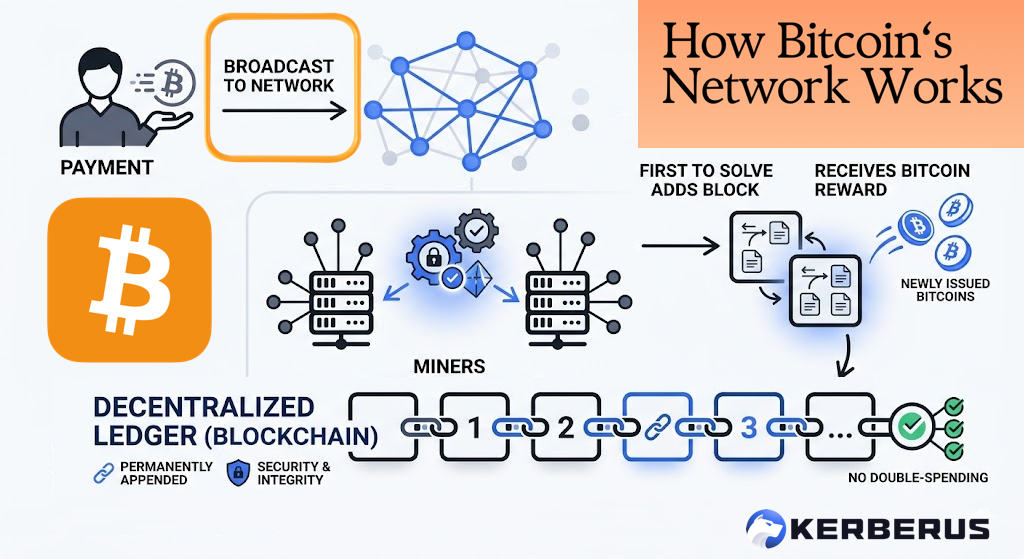
At its core, Bitcoin operates on a technology known as the blockchain, a decentralized ledger that records all transactions made with the digital currency. Bitcoin is created through a process known as mining, where powerful computers compete to solve complex mathematical problems.
The first to solve these problems gets to add a new block to the blockchain and is rewarded with a certain number of newly issued bitcoins.
When a Bitcoin transaction is made, it is broadcast to the network. Miners participants with high-powered computers then validate the transaction. Once validated, the transaction is added to a block, and once that block is full, it is mined and permanently appended to the blockchain. This process ensures the security and integrity of all Bitcoin transactions, making it nearly impossible to double-spend or counterfeit bitcoins. This decentralized, consensus-driven approach to verifying transactions is one of Bitcoin’s key innovations.
How to Buy Bitcoin
Buying Bitcoin is straightforward with the right tools. First, you’ll need a digital wallet to store your Bitcoin. Established wallets like Trust Wallet, MetaMask, and Phantom are great choices for beginners; they all support Bitcoin, Ethereum, Solana, and many other currencies.
Once you have a wallet, you can purchase Bitcoin from a reputable cryptocurrency exchange like Coinbase using traditional money. Once purchased, the Bitcoin will be sent to your exchange wallet’s address. However, it’s important to understand that using a custodial exchange means the exchange holds your crypto on your behalf, not you. Learn more about the Proof of Keys movement here.
To self-custody your Bitcoin, you’ll need to transfer it to your own private wallet address. Follow your service provider’s instructions carefully to do this safely.
How to Keep Your Bitcoin Secure
How to Store Bitcoin Safely
In 2026, the safest way to store Bitcoin is to keep your private keys offline using a reputable hardware wallet with strong operational security practices.
Avoid leaving meaningful amounts on exchanges if you do not control the keys and remain exposed to hacks or platform failures. Instead, use a hardware wallet from a well-known manufacturer, set it up directly from the official website, and write down your recovery seed phrase on paper or metal. Never store it in a notes app, cloud storage, or screenshot.
Enable a PIN and, if supported, a passphrase for added protection. For larger holdings, consider a multisignature setup that requires multiple devices or approvals to authorize transactions. Always verify addresses carefully before sending and keep your firmware updated to protect against malware or phishing attacks.
Quick checklist:
- Use a reputable hardware wallet to keep your private keys offline
- Buy hardware devices only from the official manufacturer never from resellers
- Set up the wallet on a clean device and update firmware before use
- Write your seed phrase on paper or metal never store it digitally
- Keep your seed phrase in a secure, separate physical location
- Enable a strong PIN and add a passphrase if supported
- Avoid storing large amounts of Bitcoin on exchanges
- Verify wallet addresses carefully before every transaction
- Beware of phishing links, fake support messages, and malware
How Kerberus Keeps Your Bitcoin Safe
For Bitcoin holders, Kerberus does not change how Bitcoin works. Instead, it protects you from the risks that arise when you move beyond basic Bitcoin storage and begin interacting with the broader Web3 ecosystem.
Kerberus acts like a safety layer between you and your crypto wallet, think of it as a transaction firewall. It scans what you’re about to connect to or sign before anything happens. While Bitcoin itself is very secure, many users take on significant risk when interacting with Web3 apps, bridges, or wrapped versions of Bitcoin such as wBTC. That’s where Kerberus makes a difference.
Here’s what it does in plain terms:
- Blocks scam websites in real time: Detects and blocks malicious or hacked crypto websites before you connect your wallet. Some dangerous pages are stopped from loading entirely.
- Warns you about dangerous addresses: Detects address poisoning and similar tricks. If a wallet address has been manipulated by a scammer, you’ll be alerted before sending funds.
- Explains transactions in plain English: Before you approve a transaction, it clearly shows what will happen to your assets
- Flags fake social accounts and live threats: Warns about impersonator accounts on X and sends real-time alerts about active scams or protocol exploits.
- Offers loss coverage: If a malicious transaction slips through and is later proven harmful, there is third-party coverage up to certain limits.
How to Use Bitcoin
Bitcoin lets you send and receive money without a bank. To get started, you need a wallet, some Bitcoin, and a basic understanding of how transactions work.
-
Get a Bitcoin Wallet
A wallet stores your private keys, which control your Bitcoin. For beginners, a mobile wallet is the easiest option to download only from the official website or app store. When you create a wallet, you will receive a seed phrase. Write it down and store it safely; this is the only way to recover your funds if you lose your device. -
Buy Bitcoin
You can buy Bitcoin on a reputable exchange. Create an account, complete identity verification if required, and purchase Bitcoin using your local currency. Once you’ve bought it, transfer the Bitcoin to your personal wallet. Leaving funds on an exchange means you don’t fully control them. -
Send Bitcoin
To send Bitcoin, open your wallet and paste the recipient’s address or scan their QR code. Enter the amount and review the transaction details carefully. Always double-check the address transactions cannot be reversed. You’ll also choose a network fee; higher fees typically result in faster confirmation. -
Receive Bitcoin
To receive Bitcoin, copy your wallet’s public address and share it with the sender, or display your QR code for convenience. Once the transaction is broadcast to the network, you’ll see it as pending until it receives the required number of confirmations. -
Understand Confirmations and Fees
Bitcoin transactions are confirmed by miners and added to the blockchain. Most wallets display confirmation status in real time. For everyday payments, one or two confirmations may be sufficient. For larger amounts, more confirmations provide extra security. -
Keep Your Bitcoin Secure
Never share your private keys or seed phrases. Be cautious of phishing websites, fake support agents, and giveaway scams. For larger amounts, consider moving your Bitcoin to a hardware wallet for stronger protection.
Using Bitcoin becomes straightforward once you understand these basics. Start with small amounts, practice sending and receiving, and build confidence over time.
How Secure Is Bitcoin Really?
Bitcoin’s Security Model and Proof of Work
Bitcoin’s security comes from miners spending real-world electricity to lock transactions into a public ledger in what we call proof-of-work.
Proof of Work (PoW) secures blockchains like Bitcoin by having miners compete to solve a hard computational puzzle: hashing block data with a nonce until it meets a low target value. The winner adds the block, earns rewards, and others verify it easily, preventing spam and ensuring consensus through computational cost.
The more machines mining (hash rate), the harder it is for anyone to rewrite recent transactions. To “change history,” an attacker would need more mining power than the rest of the world combined, an astronomically expensive and highly visible undertaking. For everyday users, this means the base Bitcoin network is one of the most battle-tested systems in existence. Most real losses happen elsewhere.
Can Bitcoin Be Hacked?
Headlines saying “Bitcoin was hacked” almost always refer to an exchange, wallet app, or user account being compromised, not the core network. The Bitcoin blockchain has never been globally hacked to steal coins from arbitrary wallets. Real risks include fake apps, phishing sites, and compromised exchanges. If you control your own keys and follow basic security practices, you avoid the vast majority of threats behind those alarming headlines.
What a 51% Attack on Bitcoin Would Look Like
In a 51% attack, one group controls the majority of mining power and could briefly rewrite very recent transactions for example, depositing to an exchange and then erasing that deposit. However, they cannot drain arbitrary wallets or change the protocol rules unilaterally. Executing this on Bitcoin would cost billions in hardware and energy, and would be detected almost immediately by the global community. For regular users making normal-sized transfers, a Hollywood-style 51% attack is far less likely than the risk of choosing a bad platform.
Real-World Threats to Bitcoin Holders
Phishing, Malware, and Social Engineering
Most people lose Bitcoin because they’re tricked, not because “the blockchain failed.” Phishing sites copy real wallets and exchanges to steal login credentials and seed phrases. Malware can silently swap the address you paste with the attacker’s address, redirecting funds entirely. Scammers impersonate support staff, influencers, or “account managers” to pressure victims into sharing sensitive information.
As a rule: never enter your seed phrase into a website, only download wallets from official sources, and always double-check addresses before sending.
SIM Swaps and Account Takeovers
SIM swap attacks target your phone number so attackers can reset passwords and intercept SMS two-factor authentication (2FA) codes. Once they control your number, they can often take over exchange accounts, email, and even banking within minutes. This is why relying on SMS 2FA for significant crypto holdings is risky. Use an app-based authenticator (such as Google Authenticator or Authy) or a hardware security key, and set a strong PIN or port freeze with your mobile provider.
Exchange Hacks and Custodial Risk
When your BTC sits on an exchange, you don’t truly own it; the platform controls the keys. If that company gets hacked, freezes withdrawals, or collapses, your coins may be lost. History is full of exchange disasters that had nothing to do with Bitcoin’s protocol. Treat exchanges like airports, not hotels: pass through, don’t move in. Use them to buy or sell, then withdraw to a wallet where you control the seed phrase especially for savings or long-term holdings.
How to Store Bitcoin Securely in 2026
Hot vs Cold Wallets
Hot wallets (mobile apps, browser extensions, Web3 wallets) are always online, great for small everyday amounts but more exposed to attacks. Cold wallets (hardware devices or offline setups) keep your keys offline, making remote attacks far harder.
A simple rule: keep “spending money” in a hot wallet and your “savings” in cold storage. If losing the amount in a wallet would significantly impact your finances, it belongs in a more secure, offline setup.
When to Use a Hardware Wallet
A hardware wallet is essentially a dedicated safe for your Bitcoin that never exposes your private keys to your phone or laptop. Even if your computer is infected with malware, an attacker still can’t copy your keys from the device. If you hold more Bitcoin than you’d feel comfortable carrying as cash, a hardware wallet is a smart upgrade. For larger amounts, combining multiple hardware wallets in a multisig setup ensures no single lost or stolen device can move funds on its own.
Backups, Seed Phrases, and Inheritance
Your seed phrase is the master key to your Bitcoin wallet and treat it like a high-value secret. Write it down clearly (paper or metal), keep it offline, and store it somewhere safe from fire, water, and theft. Never screenshot it, store it in cloud notes, or share it with anyone claiming to be “support.”
If you hold meaningful savings in Bitcoin, consider inheritance planning: leave clear instructions so a trusted person can locate the backup and understand which wallet it belongs to, should something happen to you.
Practical Bitcoin Security Best Practices
Passwords, 2FA, and Device Hygiene
Strong basics protect most retail users.
Use long, unique passwords for email, exchanges, and any wallet logins, and store them in a reputable password manager.
Enable two-factor authentication (2FA) everywhere using an authenticator app or hardware key rather than SMS where possible.
Keep your phone and laptop updated, avoid pirated software and random browser extensions, and only install wallet apps from official sources.
If a device feels compromised, don’t use it to manage meaningful amounts of Bitcoin.
Safe Browsing and Network Habits
How and where you go online matters. Fewer distractions and fewer apps mean fewer attack vectors.
Here are some best practice tips to protect your BTC:
- Avoid making significant Bitcoin transactions over public Wi-Fi; if necessary, use a trusted VPN to encrypt your traffic.
- Bookmark official wallet and exchange URLs and use those bookmarks instead of clicking links from emails, direct messages, or ads.
- Consider using a separate browser profile or even a dedicated device solely for crypto, with no extra apps or extensions.
A Simple Bitcoin Security Checklist
- Is your device updated and free from suspicious software?
- Are you using a reputable wallet or exchange, downloaded from an official source?
- Is 2FA enabled for your exchange and email, using an authenticator app or hardware key rather than SMS?
- Did you double-check the recipient address (at least the first and last few characters) before sending, and consider a small test transaction first?
- Is your seed phrase backed up offline in a safe, recoverable location?
The Future of Bitcoin Security
Bitcoin’s future remains promising. As more individuals and institutions adopt it, its value and utility are likely to grow. Beyond being a currency, Bitcoin’s underlying blockchain technology has the potential to disrupt industries from finance to supply chain management by providing a decentralized, transparent method of recording data.
Mining Centralization and Fee-Only Security
Bitcoin’s block rewards halve every four years, meaning miners will increasingly rely on transaction fees as their primary income. Dropping from 50 BTC per block in 2012 to just 1.5625 BTC after the next halving in 2028, some worry this could reduce mining activity and weaken overall network security over time. Large mining pools also raise concerns about a small number of players having disproportionate influence. For retail holders, the practical takeaway is simple: focus on your own security practices today, and follow credible sources to stay informed about how the network evolves rather than reacting to every “Bitcoin is dead” headline.
Nation-States, Censorship, and Infrastructure Risks
Governments can’t easily turn off Bitcoin, but they can pressure the companies and infrastructure around it. This might look like stricter rules on exchanges, pressure on large mining pools, or attempts to monitor or block certain transactions. The community responds with more decentralized mining, privacy tools, and censorship-resistant relay networks. For individual users, using reputable non-custodial wallets and, where possible, running your own node keeps you less dependent on any single company or jurisdiction.
Quantum Computing and Bitcoin
Quantum computing is a frequently cited concern but remains a long-term issue not an immediate threat. In theory, sufficiently powerful future quantum computers could undermine some of the cryptography protecting certain Bitcoin addresses. When that risk becomes concrete, Bitcoin can upgrade to quantum-resistant signature schemes through widely discussed protocol updates. As a retail user, the best move is simple: avoid reusing addresses and be ready to follow mainstream guidance from reputable Bitcoin developers and wallet providers if a serious quantum threat ever materialises.
Bitcoin and Traditional Finance (TradFi)
After BlackRock announced its Bitcoin ETF application during a period of intense regulatory pressure on crypto exchanges in 2023, Bitcoin was finally taken seriously by Wall Street as a legitimate asset class. This was further solidified by prominent public endorsements, including Donald Trump’s “Never Sell Your Bitcoin” speech in 2024. Now in 2026, Bitcoin is increasingly purchased by non-crypto financial institutions as regulatory clarity improves through legislation such as the GENIUS Act.
Bitcoin ETFs
By 2026, Bitcoin exchange-traded funds (ETFs) have become a mainstream way for everyday investors to gain exposure to Bitcoin through familiar traditional financial markets. You can buy shares in a Bitcoin ETF on a stock exchange, and the price of those shares will track the price of Bitcoin with no private keys or crypto wallets required. Most of the major products are spot ETFs, meaning they hold actual Bitcoin in custody to back the shares investors purchase.
ETFs are straightforward and regulated but this also means investors don’t actually own the underlying Bitcoin. They own a share of a fund, which comes with management fees and counterparty considerations. For many investors operating through mainstream markets in 2026, however, a Bitcoin ETF remains the most accessible entry point.
Bitcoin Digital Asset Treasuries (DATs)
Bitcoin Digital Asset Treasuries (DATs) are companies that hold significant amounts of Bitcoin on their balance sheets as a core part of their corporate strategy. Rather than buying Bitcoin directly or through an ETF, investors can buy shares in one of these companies to gain indirect exposure.
By 2026, a number of companies treat Bitcoin as a strategic reserve asset similar to how others might hold gold. Their share prices tend to correlate with Bitcoin’s price, sometimes in amplified fashion, offering a degree of leveraged exposure where the share price moves more dramatically than Bitcoin itself. Unlike an ETF, investing in a DAT means exposure not only to Bitcoin’s price but also to the company’s own operations, debt levels, and business performance. Even so, DATs have become a significant channel for institutional Bitcoin accumulation and can have a meaningful impact on circulating supply.
Bitcoin Spot ETFs vs Futures ETFs
Bitcoin Futures ETFs are funds that track the price of Bitcoin futures contracts rather than Bitcoin itself. These ETFs allow investors to speculate on the future price of Bitcoin without directly owning the cryptocurrency. The first Bitcoin Futures ETF launched in the United States in October 2021, and several others have followed.
Bitcoin Spot ETFs, by contrast, aim to track the actual price of Bitcoin by holding it directly. They offer investors exposure to Bitcoin’s real-time price movements, similar to how traditional ETFs track stocks or commodities.
A note on Strategy (formerly MicroStrategy) and concentration risk:
Michael Saylor’s Strategy holds over 713,000 Bitcoin, purchased at an average price of approximately $76,000 each at a total cost of around $54 billion, funded through roughly $8 billion in debt and equity issuance.
Key risk scenarios:
- If Bitcoin drops to $50,000, Strategy faces approximately $18 billion in paper losses (while still holding the coins).
- If its stock declines sharply and it can’t raise fresh capital, it may be forced to sell Bitcoin to service its debt.
A significant sell-off would likely only occur if Bitcoin fell into the $20,000–$50,000 range and financing options dried up simultaneously. With Strategy holding roughly 3–4% of all Bitcoin, a forced sale could create short-term price pressure but the network itself would continue functioning normally.
More broadly, Bitcoin ETFs give institutions and pension funds easy Bitcoin exposure, but they concentrate custody risk among a small number of firms. During periods of panic such as the $4.5 billion in outflows seen last year they can amplify short-term volatility. The blockchain remains unaffected. For beginners: ETFs grow the market and lower the barrier to entry, but owning your own wallet removes the middleman entirely.
Regulatory Risk: Is Bitcoin a Commodity or a Security?
While Bitcoin’s early years attracted scrutiny from lawmakers and law enforcement in part due to its use on darknet markets it is now widely recognized as a legitimate asset class. The long-running debate over Bitcoin’s legal classification has largely been settled: even the SEC has concurred that Bitcoin is a commodity, owing to its decentralized nature and absence of any organized fundraising, meaning it does not meet the criteria of the Howey Test.
In the United States, the Commodity Futures Trading Commission (CFTC) has classified Bitcoin as a commodity, akin to gold or oil, reflecting its use as both a medium of exchange and a store of value.
Bitcoin’s Evolution in Recent Years
Bitcoin detractors often criticize the apparent slow pace of changes on the world’s largest blockchain, contrasting it with the constant development activity on smart contract platforms like Ethereum and Solana. This critique is not entirely accurate. The Taproot upgrade, activated in 2021, brought meaningful improvements including support for more complex smart contract functionality. It also made multi-signature transactions more efficient, private, and cost-effective.
Bitcoin DeFi (BTCFi)
Bitcoin DeFi or BTCFi turns your Bitcoin from “digital gold” into a productive asset that can earn yield through lending, borrowing, and trading, without the need for a bank.
How it works:
- Layer 2 networks like Stacks and Rootstock add smart-contract functionality to Bitcoin.
- Wrapped BTC (such as WBTC) lets you use Bitcoin on faster chains for DeFi applications.
- New protocols like Ordinals and Runes bring tokens and NFTs directly to the Bitcoin base layer.
Ways to use your Bitcoin in DeFi:
- Lend BTC and earn 2–5% interest from borrowers
- Borrow stablecoins using BTC as collateral without selling
- Stake BTC to secure other networks (e.g. Babylon Protocol) and earn rewards
- Trade instantly on peer-to-peer DEXs like Sovryn
Why it matters: Bitcoin that would otherwise sit idle can now generate yield around the clock. BTCFi fees also help compensate miners as block rewards diminish over time.
Beginner tip: Start small on reputable platforms. Self-custody remains paramount; you are still your own bank.
What are BRC-20 Tokens?
BRC-20 tokens are a token standard on the Bitcoin network, conceptually similar to ERC-20 tokens on Ethereum. They follow a protocol that enables interoperability between different tokens issued on Bitcoin. BRC-20 tokens can represent a wide range of digital assets and have been used for various purposes from experimental currencies to governance mechanisms. While they expand Bitcoin’s use cases, they have also been criticized for contributing to network congestion and rising transaction fees.
By 2026, BRC20 has evolved from a memecoin‑driven experiment into a recognized asset class on Bitcoin, with thousands of tokens (ORDI, 1000SATS, MUBI, and others) traded across dedicated Bitcoin‑focused markets and growing ecosystem tools. At the same time, BRC20 activity is still cited as a contributor to Bitcoin‑network congestion and elevated on‑chain fees, especially during NFT and memecoin‑driven market waves.
What are Bitcoin Ordinals?
Bitcoin Ordinals are a system for assigning unique identifiers to individual satoshis, the smallest unit of Bitcoin (one hundred millionth of a BTC). The ordinal number is determined by the sequence in which the satoshi was mined, making certain early satoshis historically significant, much like a low serial number on a banknote.
Ordinals function as a form of non-fungible token (NFT) on the Bitcoin blockchain. They can represent digital assets such as images, video, and audio, or even be used to denote ownership of real-world assets like property or vehicles.
In practice, Ordinals underpin two main use cases in 2026: Bitcoin‑native NFTs (art, collectibles, “rare sats”) and the BRC20 token standard, which repurposes inscriptions to encode fungible token contracts on satoshis. This expanded utility has deepened interest in Bitcoin‑based digital assets, even as it continues to raise questions about blockchain bloat, fees, and long‑term scalability.
Conclusion
Whether you should invest in Bitcoin is a personal decision that should be based on careful research and consideration of your own financial situation. While Bitcoin is a highly volatile asset, it also presents significant potential for returns and serves as a meaningful hedge against inflation and centralized monetary policy.
Predictions about Bitcoin’s future price vary widely, and it’s more useful to focus on its core value proposition as a scarce, decentralized, censorship-resistant form of money than to chase short-term price targets.
Some believe Bitcoin will continue to appreciate as trust in traditional monetary systems erodes and institutional adoption deepens. Others point to regulatory risks and technical vulnerabilities as potential headwinds, though Bitcoin’s global user base and institutional foothold make an existential collapse increasingly unlikely.
If you decide to invest in Bitcoin, remember to diversify your portfolio, only invest what you can afford to lose, and keep your wallet secure.
Understanding Bitcoin is the first step towards navigating the exciting world of cryptocurrency. Welcome aboard.
Bitcoin for Beginners Quiz
Test how well you understand Bitcoin’s history, mechanics, and security basics.
1. Who created Bitcoin and published its whitepaper?
2. What is the maximum total supply of Bitcoin?
3. Which event is celebrated on 22 May each year in the Bitcoin community?
4. Roughly how often does a Bitcoin halving occur?
5. What is the safest way to store significant amounts of Bitcoin?
6. For most everyday users, what is the biggest real-world threat to their Bitcoin?
7. What does BTCFi (Bitcoin DeFi) allow Bitcoin holders to do?
8. Which core technology underpins Bitcoin?
Written by:
Werner Vermaak is a Web3 author and crypto journalist with a strong interest in cybersecurity, DeFi, and emerging blockchain infrastructure. With more than eight years of industry experience creating over 1000 educational articles for leading Web3 teams, he produces clear, accurate, and actionable organic material for crypto users.
- •8+ years in crypto & blockchain journalism
- •1000+ educational articles for leading Web3 teams
- •Former content lead at CoinMarketCap, Bybit, OKX
Related Guides
See more guides
How to Read a Crypto Transaction Before You Sign It
Mar 23, 2026 • 4 minutes read
Wallet Hygiene Guide: How To Keep Your Crypto Safe
Mar 18, 2026 • 4 minutes read

Solana 101: A 2026 Guide to SOL and Its Ecosystem
Mar 13, 2026 • 4 minutes read
Crypto and Web3's 12 Biggest Narratives in 2026
Feb 20, 2026 • 4 minutes read
Install once & immediately get protected from scams, phishing and hacks. Zero losses for 250k+ users in 3 years. Now with up to $30,000 in coverage.