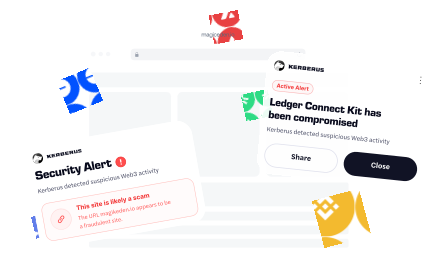
Kerberus CEO: "Web3 Users Shouldn't Be Getting Drained in 2025"
Alex Katz on fighting a culture that normalized scams, building real-time defense systems, and why Kerberus maintains zero user losses while protecting 250,000+ users.

A Conversation With Alex Katz, CEO and Co-Founder of Kerberus
In an industry where scams and hacks are often treated as the cost of doing business, Kerberus has taken a radically different approach. The company has protected more than 250,000 users with zero losses over nearly three years — a record few if any in Web3 can match.
At October 2025’s Token2049 Singapore conference, the world’s flagship crypto event hosted every year in the iconic Marina Bay Sands, Kerberus came out swinging, branding its entire entrance.
The message was clear: The new gatekeepers of Web3 had arrived, ready to keep the bad guys out.
https://x.com/Kerberus/status/1975547231894970716
Alex Katz, CEO and co-founder of Kerberus, conducted several interviews, where he covered some big topics:
- What are the keys to their success?
- What are the biggest current weaknesses holding Web3 safety back?
- What does “Secure by Design” mean?
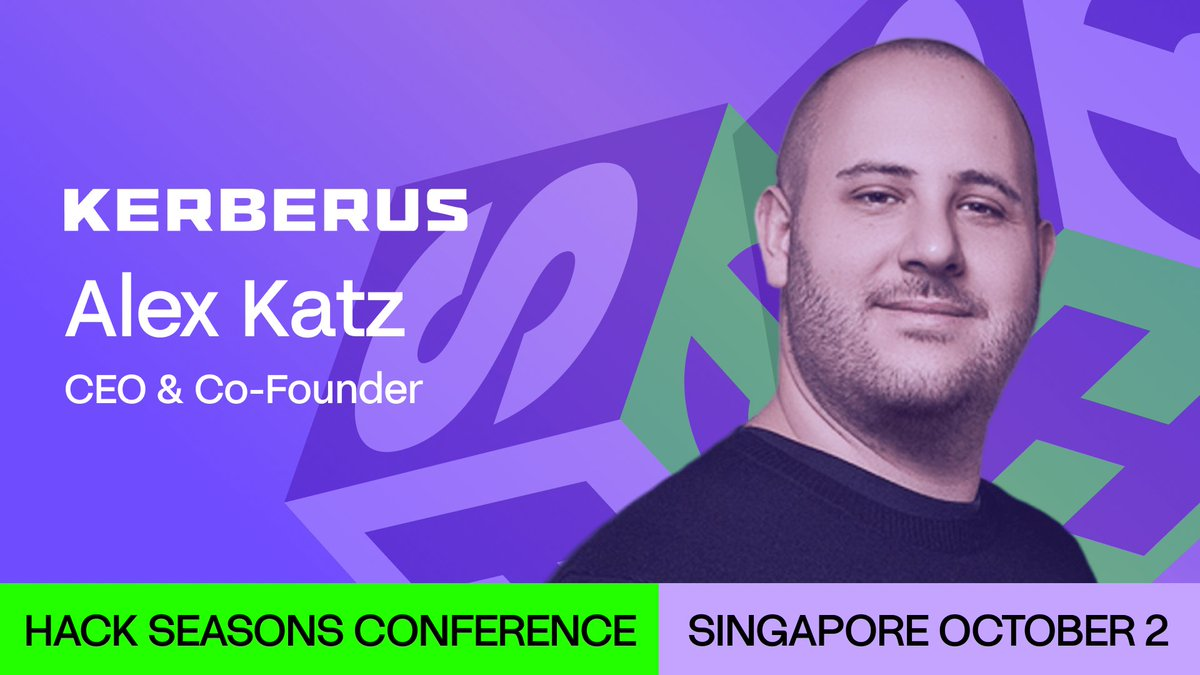
Speaking at the Hack Seasons conference, Alex explained how this Web3 security powerhouse built real-time protection for users, why the crypto mantra DYOR just isn’t enough anymore, and why preventing small-scale scams could ultimately save billions.
You can watch two of his interviews below:
Here are some of Alex’s biggest takeaways:
Changing a Web3 Culture That Normalized Scams
Most of Web3 has come to accept scams and hacks as inevitable. Katz says that mindset was exactly what motivated him and his co-founder to build something better.
He met his co-founder and Kerberus CTO Danor Cohen, an award-winning cybersecurity expert, through the Neo Tokyo NFT community, where they kept hearing from people who were losing everything, not just money, but their sense of safety.
https://x.com/Kerberus/status/1761221900074942548
“Some were getting divorced. Some even threatened to take their lives. It was devastating.”
That was in 2022, when Web3’s security landscape was still fragmented and the entire industry was under existential strain from the FTX and Luna collapse and the regulatory onslaught that followed in their wake, with American federal agencies launching the notorious Operation Chokepoint 2.0.
The missing layer
The Kerberus team, first known as MintDefense, decided to take on the problem at its root — by developing real-time, automated security tools that help users safely self-custody their crypto assets.
“In decentralized finance, everyone acts as their own bank,” Katz said.
“But the tools available to those ‘banks’ aren’t good enough. We’re building the missing layer — security infrastructure that lets people hold their funds without losing everything.”
Building Real-Time Web3 Defense Systems
Kerberus is designed to react instantly to potential threats. But while that sounds complex, Katz argues that building real-time infrastructure is actually simpler than relying on external data.
“Most companies use outside sources — blacklists from other firms — but that poisons their data,” he explained.
”99.9% Accuracy”
“We built everything from scratch. Our system analyzes every transaction prompt in real time, assessing dozens of factors before producing a result that’s 99.9% accurate, with a very low false-positive rate.”
This is a message echoed by co-founder Cohen, who recently wrote in a CoinTelegraph op-ed that the industry relies on outdated postmortems to combat AI-powered fraud, while real-time transaction defense must be the focal point and become infrastructure.
False positives erode trust
False positives, Katz added, are one of the most dangerous flaws in crypto security.
If users get too many false warnings, they stop trusting them, and that’s when they get drained.
That’s why Kerberus builds and refines all of their technology internally, to improve accuracy while minimizing false alarms.
Web2 Lessons For Web3: Kerberus Maintains Zero User Fund Losses
Maintaining zero losses for years in Web3 is no small feat. When asked how Kerberus had managed it, Katz kept his cards close to his chest, for good reason.
“I can’t tell you the secret,” he said. “If I did, attackers would know it too — and they’d learn how to go around it. Security doesn’t work like open-source crypto.”
What he could share, however, was that the team’s background plays a crucial role.
“My co-founder has 17 years of experience in offensive cybersecurity. He’s helped protect major Web2 companies like Dropbox, PayPal, and Google from attacks,” Katz noted. “We apply that expertise — along with Web3-specific knowledge — to build our proprietary detection systems. That’s how we’ve achieved zero user losses.”
Why DYOR Isn’t Enough Anymore
The phrase “DYOR” is as deeply embedded in crypto parlance as “Not Your Keys” — but Katz believes it’s outdated when it comes to personal security.
“If it’s about choosing what coin to buy, sure, everyone should do their own research,” he said. “But when it comes to protecting themselves, that advice doesn’t work anymore.”
He pointed out that many scams now originate from poisoned search results, fake Google ads, and phishing sites that appear legitimate.
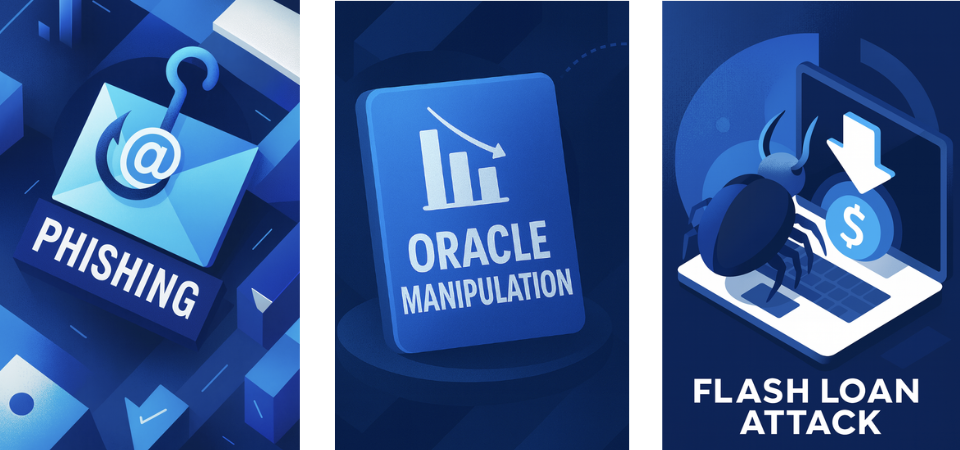
“We can’t expect users to recognize every threat. They need automated protection. Whether their investments go up or down is their choice — but they should never be stolen from. That’s why our system handles everything automatically.”
Why Small Scams Matter More Than Big Hacks
When asked which major Web3 hack best illustrates the need for Kerberus, Katz refused to single one out.
“It’s not about one big event like the Bybit incident,” he said. “It’s about the millions of smaller attacks happening every day.”
Some phishing sites go live for an hour, stealing thousands of dollars before disappearing.
“For an average user, the loss might be $1,000. For an advanced user, it might be $10,000. But each of these cases is devastating. People lose trust and leave the space entirely.”
To address that, Kerberus not only prevents attacks but also provides up to $30,000 in coverage if its software ever fails to detect a threat.
“We’re creating a safety net. Even if something slips through — which hasn’t happened — users are protected. It’s not as headline-grabbing as a billion-dollar hack, but these smaller losses add up to billions collectively. Protecting those users is how we measure success.”
The Future of Safer Web3
Kerberus’s vision goes beyond preventing wallet drains. It’s about rebuilding trust in decentralized finance, where personal responsibility doesn’t have to mean personal risk.
“Web3 users shouldn’t have to become cybersecurity experts just to stay safe,” Katz concluded.
“If you install Kerberus, you won’t get drained — it’s that simple."
"Secure by Design”
As the industry continues to iterate from its humble beginnings, Kerberus’s model — real-time protection, proprietary detection, and zero losses — might just redefine what “secure by design” means in Web3.
The Kerberus team will next be attending conferences in Dubai and Abu Dhabi in December 2025. Stay up to date by following Kerberus on X.
Ready for real-time protection? Install Kerberus Sentinel3 and join 250k+ users with zero losses, 99.9% detection rate, and up to $30,000 coverage per transaction.
Written by:
Werner Vermaak is a Web3 author and crypto journalist with a strong interest in cybersecurity, DeFi, and emerging blockchain infrastructure. With more than eight years of industry experience creating over 1000 educational articles for leading Web3 teams, he produces clear, accurate, and actionable organic material for crypto users.
- •8+ years in crypto & blockchain journalism
- •1000+ educational articles for leading Web3 teams
- •Former content lead at CoinMarketCap, Bybit, OKX
Related Guides
See more guides
How to revoke crypto token approvals in 2026
Mar 28, 2026 • 4 minutes read
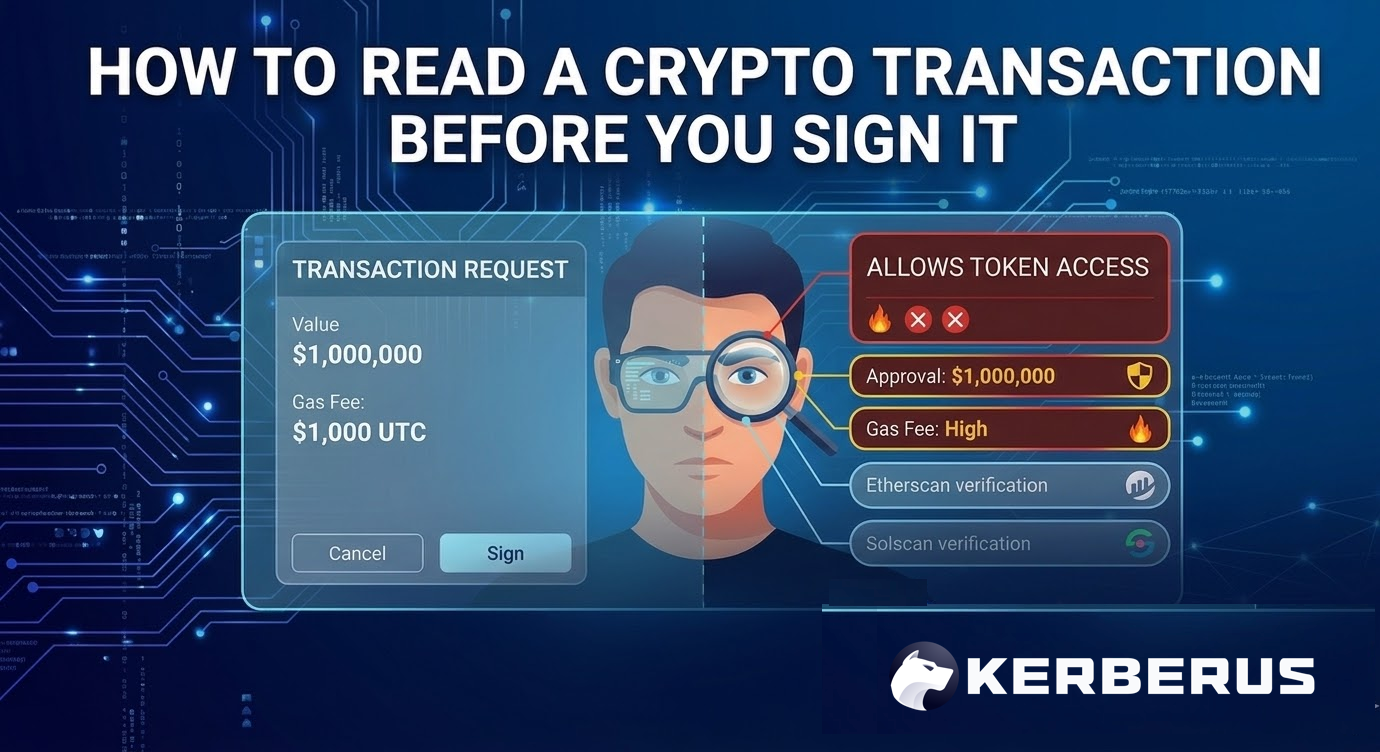
How to Read a Crypto Transaction Before You Sign It
Mar 23, 2026 • 4 minutes read

Bitcoin 101 For Beginners: BTC’s Past, Present and Future
Mar 19, 2026 • 4 minutes read
Wallet Hygiene Guide: How To Keep Your Crypto Safe
Mar 18, 2026 • 4 minutes read
Install once & immediately get protected from scams, phishing and hacks. Zero losses for 250k+ users in 3 years. Now with up to $30,000 in coverage.