$5 Wrench Attack
Learn what wrench attacks are, how physical coercion threatens crypto holders, and essential personal security measures.
What Is a Wrench Attack?
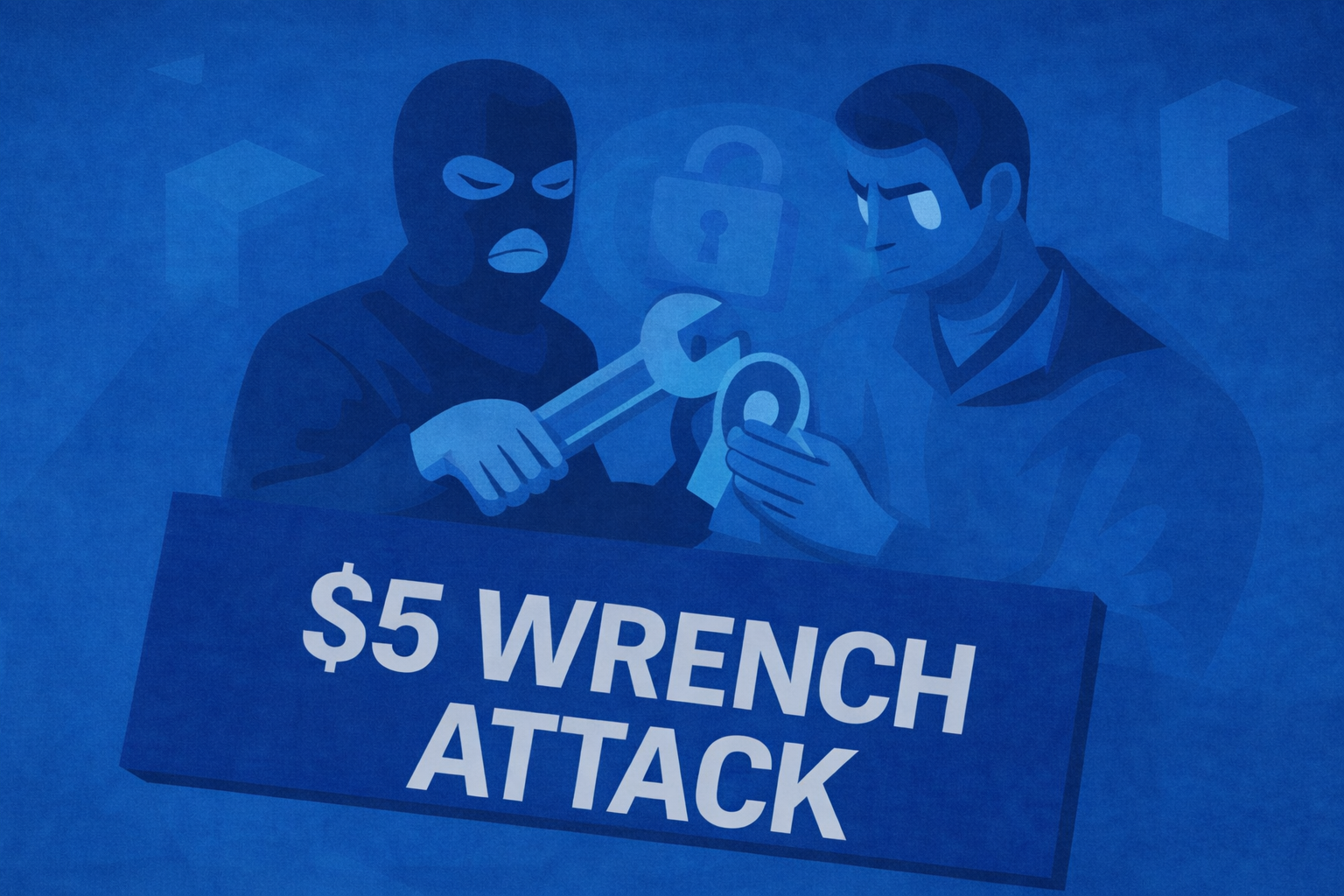
A wrench attack (or $5 wrench attack, to underline how cheap it is to make happen) takes place when criminals use physical force or threats, not hacking, to steal cryptocurrency. The name comes from the idea that no amount of encryption can protect you if someone threatens you with a wrench until you hand over your passwords or seed phrases. It’s a brutal reminder that crypto security isn’t just about technology, but also about how well you protect your physical safety.
How It Works
Unlike digital attacks, wrench attacks target the human holding the keys. Criminals may use physical intimidation, home invasion, kidnapping, or torture to force victims into revealing seed phrases, signing transactions, or unlocking hardware wallets.
Because blockchain transactions can’t be reversed, once funds are transferred under duress, they’re gone forever. There’s no bank to call, no fraud department to reverse the charge.
These attacks often target people who’ve publicly discussed their crypto holdings on social media or at conferences. Attackers do their homework, identifying victims with substantial holdings and tracking their movements though social engineering. The crime is planned, not opportunistic.
Real-World Attacks
Wrench attacks expose the harsh reality that perfect cryptography means nothing when personal safety fails. In January 2025, the father of a Ledger co-founder was kidnapped in France in a crypto-related extortion attempt, making international headlines. The incident showed that even families of crypto security executives aren’t immune to physical threats. It’s also ironic because in 2019 when Ledger criticized Trezor for not having a secure element, the founder of Trezor said that all the most sophisticated hardware doesn’t protect a Ledger user against a wrench attack.
Several similar cases throughout 2024 and 2025 have made the crypto community increasingly aware of this danger.
How to Protect Yourself
-
Never publicize your crypto holdings on social media or public forums
-
Use separate hot wallets (smaller amounts for daily use) and cold wallets (larger holdings kept offline)
-
Consider multisig wallets requiring multiple approvals for large balances, even under duress, you can’t transfer funds alone
-
Remember: in crypto, personal security is just as important as Web3 security
-
Use Web3 security tools like Kerberus and Pocket Universe to get real-time protection and warnings when interacting with Web3 platforms
-
Check our Learn academy for top crypto safety information
Written by:
Werner Vermaak is a Web3 author and crypto journalist with a strong interest in cybersecurity, DeFi, and emerging blockchain infrastructure. With more than eight years of industry experience creating over 1000 educational articles for leading Web3 teams, he produces clear, accurate, and actionable organic material for crypto users.
- •8+ years in crypto & blockchain journalism
- •1000+ educational articles for leading Web3 teams
- •Former content lead at CoinMarketCap, Bybit, OKX
Related Terms
See more glossary terms


Install once & immediately get protected from scams, phishing and hacks. Zero losses for 250k+ users in 3 years. Now with up to $30,000 in coverage.