Gas Fee
Learn what a gas fee is in crypto, how it's calculated on Ethereum and other blockchains, and how bots exploit gas to extract value from everyday traders.
What is a Gas Fee?
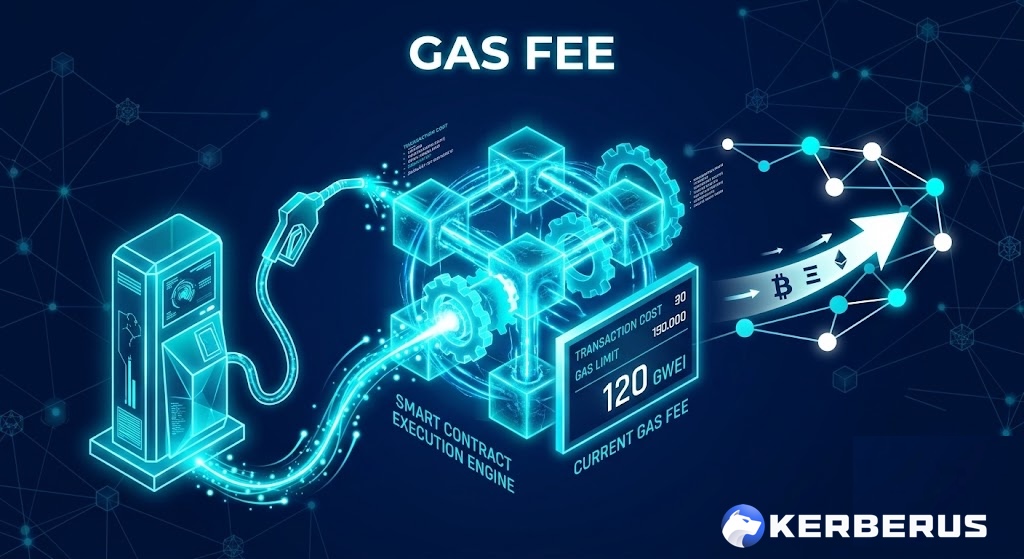
A gas fee is the transaction cost you pay to have your action processed on a blockchain network. Every time you send crypto, interact with a smart contract, or use a DeFi protocol, validators and miners require compensation for the computational work of including your transaction in a block.
On Ethereum, this cost is denominated in gwei (a fraction of ETH) and fluctuates depending on how much demand exists for block space at any given moment.
Gas fees are not optional and not refundable. Even if a transaction fails, you still pay for the computation used up to the point of failure.
How It Works
Think of block space like seats on a flight. When demand is low, tickets are cheap. When there’s a popular NFT mint or a token launch attracting thousands of simultaneous transactions, prices spike because everyone is competing for limited space. You set a maximum gas fee you’re willing to pay, and validators prioritize transactions that offer higher fees.
This creates an opportunity for exploitation. Automated bots, called MEV (Maximal Extractable Value) bots, constantly monitor the public transaction queue (the “mempool”) for profitable trades. When they spot a large swap you’re about to make, they can pay higher gas to jump ahead of you, buy the same asset first, let your transaction push the price up, then immediately sell into your trade for a profit. This is called a sandwich attack, and it costs you money on every affected transaction through worse prices and wasted slippage.
Between November 2024 and February 2025, spam bots exploiting MEV vulnerabilities on the Base Layer-2 network consumed an additional $11 million in gas-per-second throughput, crowding out legitimate users and artificially inflating fees according to Flashbots reporting via ZENMEV. In March 2025, EigenPhi data recorded more than 33,000 users victimized by sandwich attacks in a single month, orchestrated by just 101 bots.
How to Reduce Risk
-
Set slippage tolerance to 0.5% or below on DEX trades to reduce how much a sandwich bot can profit from your transaction.
-
Use MEV-protected RPC endpoints (such as Flashbots Protect or a private mempool service) to keep your transactions invisible to bots until they’re confirmed.
-
Avoid large swaps during peak congestion periods, as gas wars spike fees and increase MEV exposure simultaneously.
-
Check estimated gas costs in your wallet before confirming, and never approve transactions where the gas fee seems disproportionately high relative to the value being sent.
FAQ:
Q: What is a gas fee in crypto?
A: A gas fee is the transaction cost you pay for a blockchain network to process your action. Every send, swap, or smart contract interaction requires computational work from validators, and gas fees compensate them. On Ethereum, fees are paid in gwei, a fraction of ETH, and fluctuate based on how much demand exists for block space.
Q: How does a gas fee work?
A: Block space is limited, so users compete for inclusion by setting higher fees. Validators prioritize transactions that pay more. MEV bots exploit this by monitoring pending transactions and paying higher gas to jump ahead of large trades, buying an asset first and selling into the user’s transaction for profit, a tactic called a sandwich attack.
Q: How can users reduce gas fee risk and avoid MEV exploitation?
A: Set slippage tolerance to 0.5% or below on DEX trades. Use MEV-protected RPC endpoints like Flashbots Protect to keep transactions hidden from bots before confirmation. Avoid large swaps during high-congestion periods, and always check that gas costs look proportional to the value of your transaction before approving.
Written by:
Werner Vermaak is a Web3 author and crypto journalist with a strong interest in cybersecurity, DeFi, and emerging blockchain infrastructure. With more than eight years of industry experience creating over 1000 educational articles for leading Web3 teams, he produces clear, accurate, and actionable organic material for crypto users.
- •8+ years in crypto & blockchain journalism
- •1000+ educational articles for leading Web3 teams
- •Former content lead at CoinMarketCap, Bybit, OKX
Related Terms
See more glossary terms
Install once & immediately get protected from scams, phishing and hacks. Zero losses for 250k+ users in 3 years. Now with up to $30,000 in coverage.