Fake Airdrop Scam
Fake airdrops promise free tokens to steal your crypto. Learn to spot scam campaigns and protect your wallet from malicious claims.

What Is a Fake Airdrop Scam?
A fake airdrop scam is a fraudulent scheme where attackers promise free cryptocurrency tokens to users in exchange for completing certain actions, such as connecting wallets, providing personal information, or signing transactions. These scams exploit the popularity of legitimate airdrops, where projects distribute free tokens to promote adoption, by creating convincing fake campaigns that actually steal funds or compromise wallet security instead of delivering promised rewards.
The Pink Drainer operation, which used fake airdrop campaigns to steal over $75 million in 2023 by draining crypto wallets once users click on its link, demonstrates how sophisticated these scams have become and why careful verification is essential
How Fake Airdrop Scams Work
Scammers create fake social media accounts impersonating popular cryptocurrency projects, influencers, or exchanges, then announce fraudulent airdrop opportunities through posts, direct messages, or sponsored advertisements. Victims are directed to malicious websites that request wallet connections, private key information, or transaction signatures disguised as “verification” or “claiming” processes.
Once users interact with these sites, attackers can drain their wallets, steal personal information, or gain ongoing access to their accounts through malicious smart contract approvals.
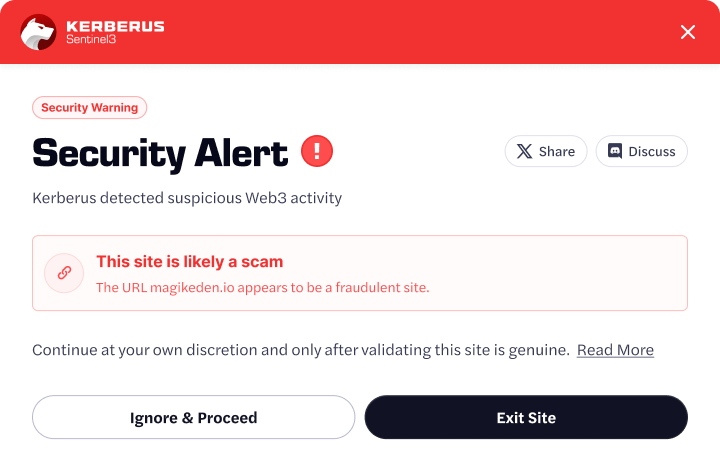
A top Web3 security tool like Kerberus can alert you in real-time through its browser extension or API.
How to Reduce Risk
- Verify airdrop announcements through official project channels, websites, and social media accounts before participating
- Never share private keys, seed phrases, or passwords in response to airdrop claims or verification requests
- Be skeptical of airdrops requiring upfront payments, personal information, or urgent action within limited timeframes
- Use dedicated wallets with minimal funds for testing new projects or claiming airdrops from unknown sources
- Use transaction analysis tools like Kerberus to scan airdrop websites and smart contracts for malicious behavior before interacting
Written by:
Werner Vermaak is a Web3 author and crypto journalist with a strong interest in cybersecurity, DeFi, and emerging blockchain infrastructure. With more than eight years of industry experience creating over 1000 educational articles for leading Web3 teams, he produces clear, accurate, and actionable organic material for crypto users.
- •8+ years in crypto & blockchain journalism
- •1000+ educational articles for leading Web3 teams
- •Former content lead at CoinMarketCap, Bybit, OKX
Related Terms
See more glossary terms

Install once & immediately get protected from scams, phishing and hacks. Zero losses for 250k+ users in 3 years. Now with up to $30,000 in coverage.