Address Poisoning
Address poisoning attacks trick you into sending crypto to scammers. Learn how to spot fake addresses and secure your wallet with Kerberus.
What Is Address Poisoning?
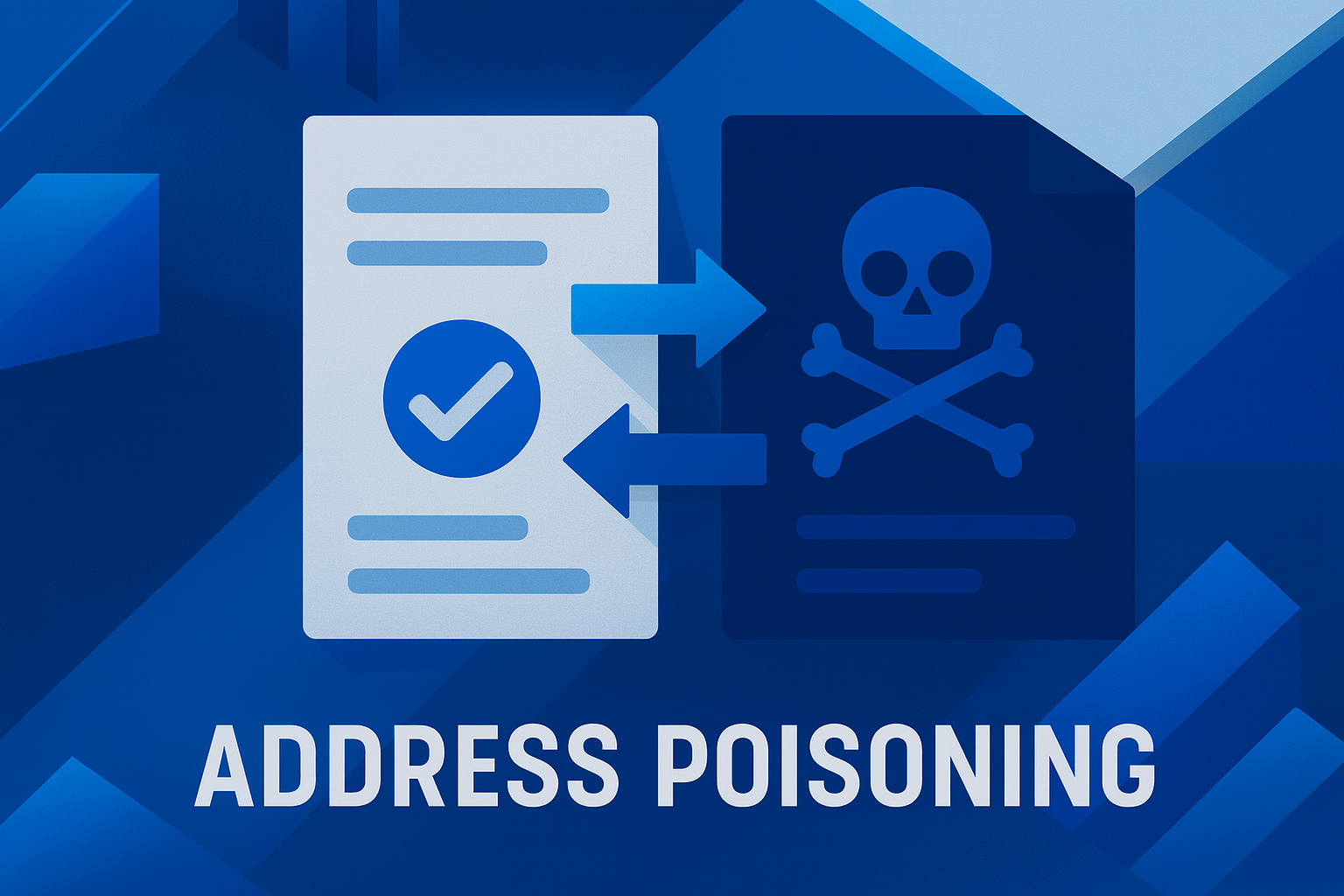
Address poisoning is a social engineering tactic where attackers insert a deceptive, look-alike address into a victim’s wallet history so it’s later copied by mistake. The attacker typically sends a dust-value transfer from an address that shares the same leading and trailing characters as a legitimate contact.
Real-world example: In May 2024, a crypto whale lost $68 million in WBTC through address poisoning attack. The victim later recovered funds through negotiations.
The attacker created a lookalike address starting with “0xd9A1c” to mimic the victim’s intended recipient “0xd9A1b.”
How Address Poisoning Works
Wallet interfaces and explorers often show truncated addresses. By placing a near-match entry in “recent activity,” attackers exploit habits like copy-pasting from history rather than source-verifying the destination. Any funds sent to the poisoned address are irreversible once confirmed on-chain. The scheme targets user behavior and UI patterns; no protocol breach is required.
How to Reduce Risk
- Use Kerberus and other leading Web3 security tools to detect social engineering tactics before they impact you
- Verify the entire destination address (or use saved contacts/ENS where supported).
- Avoid copying from transaction history; use the original trusted source.
- Treat unexpected, tiny inbound transfers as suspicious “dust.”
- Maintain an address book for frequent recipients.
- Use cold storage like hardware wallets where possible
Written by:
Werner Vermaak is a Web3 author and crypto journalist with a strong interest in cybersecurity, DeFi, and emerging blockchain infrastructure. With more than eight years of industry experience creating over 1000 educational articles for leading Web3 teams, he produces clear, accurate, and actionable organic material for crypto users.
- •8+ years in crypto & blockchain journalism
- •1000+ educational articles for leading Web3 teams
- •Former content lead at CoinMarketCap, Bybit, OKX
Related Terms
See more glossary terms
Install once & immediately get protected from scams, phishing and hacks. Zero losses for 250k+ users in 3 years. Now with up to $30,000 in coverage.